
Modern Businesses Need a Clearer Operating Layer
As a business grows, its information rarely stays in one place. Customer activity may live in an inbox or CRM. Sales data may sit inside an ecommerce platform. Tasks may be spread across spreadsheets, project tools, notes, calendars, and conversations. Alerts may come from separate systems. Reports may be built manually only when someone has time to assemble them.
This fragmentation creates a familiar problem: the business may have access to information, but not a clear operating view. The owner or team is forced to move between tools, interpret scattered signals, and decide what matters without a central place to see the full picture.
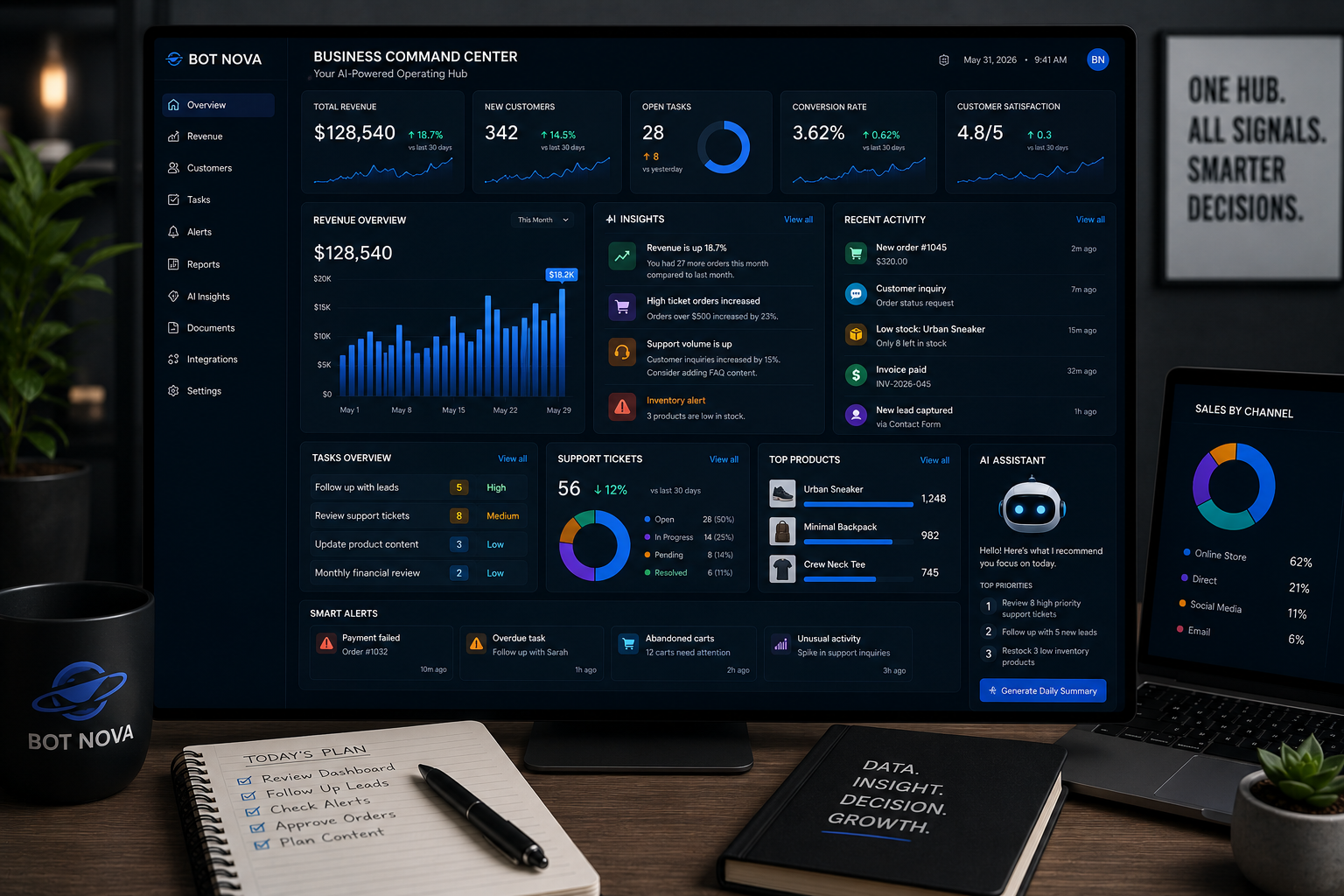
A business command center solves that problem by bringing the most important operational signals into one hub. When paired with AI, that hub becomes more than a dashboard. It becomes a decision-support layer that helps the business understand what is happening, what needs attention, and what should happen next.
A Command Center Is Not Just Another Dashboard
Many businesses already have dashboards, but dashboards alone do not solve operational fragmentation. A dashboard may show numbers, charts, or activity feeds, but it often leaves the interpretation to the user. The business still has to ask: What changed? What is urgent? What does this mean? What should we do now?
An AI-powered command center should go further. It should collect important data, summarize activity, identify exceptions, surface priorities, and connect insight to action. The value is not simply that information appears in one place. The value is that the information becomes easier to understand and act on.
The Core Function Is Operational Visibility
Operational visibility means having a timely, organized view of the business areas that influence performance. This may include revenue, customer requests, open tasks, fulfillment status, upcoming deadlines, marketing activity, support volume, expenses, leads, documents, or compliance items.
Without visibility, business owners often operate from memory and instinct. Those instincts may be valuable, but they become less reliable as volume increases. Important details get buried. Small issues remain invisible until they become urgent. Opportunities are missed because no system is designed to surface them.
An AI command center helps reduce those blind spots. It can consolidate updates from multiple tools and convert them into structured summaries, priority lists, alerts, and recommended next steps.
Data, Tasks, Alerts, and Customer Activity Should Work Together
In many businesses, data and tasks are separated. A customer sends a message, but no task is created. A report reveals a problem, but no alert is triggered. A deadline approaches, but the related documents are stored somewhere else. A lead comes in, but the follow-up process depends on someone remembering to act.
A command center connects those layers. Customer activity can create tasks. Data changes can trigger alerts. Alerts can generate summaries. Summaries can guide decisions. Decisions can create follow-up actions. This kind of connected system turns business information into operational movement.
The goal is not to centralize everything for the sake of neatness. The goal is to make sure important signals do not remain disconnected from the actions they require.
AI Makes the Command Center More Intelligent
A traditional command center organizes information. An AI-powered command center interprets it. That distinction is important because most business owners do not need more raw information. They need better context.
AI can summarize long customer conversations, classify incoming requests, explain changes in weekly performance, identify unusual patterns, prioritize tasks, draft follow-up messages, and translate operational data into plain-language recommendations. It can help leadership move from “What am I looking at?” to “What needs attention?” much faster.
This does not mean AI should make every decision. A strong command center preserves human authority. The AI prepares context, surfaces patterns, and recommends actions, while the owner or team decides how to respond.
What Belongs Inside a Business Command Center?
The right command center depends on the business model, but several categories are common across industries. The strongest systems usually combine activity tracking, task management, reporting, alerts, and communication support.
- CustomersMessages, requests, open issues, and follow-up status.
- RevenueSales summaries that show trends, changes, and performance signals.
- TasksOpen tasks, deadlines, owners, and priority levels.
- AlertsLow inventory, missing documents, overdue follow-ups, or unusual activity.
- AI SummariesPlain-language explanations of what changed and what requires attention.
- DecisionsNotes that recommend next steps or flag items for human review.
- DocumentsFile status for contracts, receipts, forms, or compliance records.
The command center should not become cluttered with every possible metric. It should focus on the information that helps the business act.
The Best Command Centers Are Designed Around Decisions
A common mistake is designing a command center around available data instead of business decisions. Just because something can be tracked does not mean it deserves central attention. The better question is: What decisions does the owner or team need to make regularly?
If the business needs to decide which leads require follow-up, the command center should prioritize lead status. If the business needs to manage customer issues, support activity should be visible. If the business depends on timely fulfillment, order exceptions and shipping delays should be surfaced. If the business struggles with financial clarity, reporting and expense summaries should be central.
When the system is designed around decisions, it becomes more useful. It stops being a collection of widgets and becomes an operating tool.
A Command Center Reduces Decision Fatigue
Business owners often carry too many open loops in their heads. They remember who needs a reply, which report needs to be checked, which task is overdue, which customer issue may become a problem, and which project is waiting for a next step. That mental load is expensive.
An AI-powered command center reduces that burden by externalizing the operational memory of the business. It gives the owner a place to see what is open, what is urgent, what changed, and what can wait. This does not eliminate responsibility, but it makes responsibility easier to manage.
When the right information is organized and prioritized, leadership can spend less time searching and more time deciding.
From Scattered Tools to a Business Operating Hub
A command center does not require every tool to be replaced. In many cases, the better approach is to connect the tools the business already uses. Email, spreadsheets, forms, calendars, CRMs, ecommerce platforms, file storage, and automation tools can feed into a central operating layer.
This is where AI workflows become especially powerful. They can collect information from different systems, clean it, summarize it, and route it into the command center in a useful format. Instead of forcing the business to abandon its existing tools, the command center helps those tools work together more intelligently.
The result is a more coherent business environment. The owner does not have to chase every signal manually. The system brings the right signals forward.
The Strategic Value Is Control
The real benefit of a business command center is not visual polish. It is control. A business with better visibility can respond faster, catch issues earlier, prioritize more clearly, and operate with less dependence on memory or guesswork.
For small businesses and growing teams, that control matters. It creates the foundation for scaling without losing track of the details that make the business function. It also creates a stronger base for automation because workflows perform better when they feed into a clear operating structure.
An AI-powered command center turns scattered business activity into organized intelligence. It helps leadership see the operation, understand the signals, and act with more discipline.
The Future of Business Operations Is Centralized Intelligence
As AI becomes more embedded in business operations, the most valuable systems will not simply generate content or automate isolated tasks. They will help businesses coordinate work across tools, people, and decisions. The command center is one expression of that shift.
It gives the business a place where data, tasks, alerts, customer activity, and decision support can come together. It creates a clearer operating rhythm. It makes the business easier to understand and easier to lead.
For businesses trying to grow without drowning in complexity, that kind of centralized intelligence may become one of the most important advantages available.